
Hurricane Damage Roof Insurance Claims
Orlando Sits on the Crossing Path, Not the Coast
Orlando doesn't take a direct hurricane landfall the way the coastlines do, but it sits squarely on the I-4 corridor path that storms cross after coming ashore on either the Gulf or Atlantic side. Charley cut across Central Florida in 2004, Irma pushed sustained tropical-storm and hurricane-force gusts through the metro in 2017, and Ian's rain bands and wind field reached well inland into Orange and Osceola counties in 2022. By the time a storm reaches Orlando it's often lost some intensity, but it hasn't lost the ability to lift flashing, separate perimeter membrane, or overload a drainage system that wasn't sized for the rainfall it just received. That's the damage pattern we document — less dramatic than coastal wind-blown structural failure, but just as real on the claim.
The Named-Storm Deductible, and Why It Changes the Documentation Standard
Florida commercial property policies typically carry a separate hurricane deductible from the standard all-other-perils deductible, and it's usually written as a percentage of the building's insured value rather than a flat dollar figure. That percentage deductible is triggered by a named storm — meaning the claim has to establish that the damage occurred during the defined hurricane event window, not sometime in the weeks before or after. We build our documentation around that requirement: photo timestamps, the storm's tracked path and landfall or closest-approach time relative to Orlando, and a damage description that ties directly to that window. A claim that can't clearly place the damage inside the named-storm event risks getting evaluated against the wrong deductible or disputed on causation entirely.
Where the Damage Actually Shows Up on Orlando's Roof Stock
On I-Drive's hotel and attraction properties — many running older built-up or modified-bitumen systems carrying dense rooftop mechanical loads — hurricane-force gusts tend to find the weakest attachment point first: parapet cap flashing, curb flashing around HVAC units, and perimeter membrane edges. The field membrane usually holds; the edges and penetrations don't. On the newer single-ply roofs downtown and around Lake Nona, damage is more often wind-uplift separation at fastener rows or seam stress from gust loading than outright blow-off. And on the large flat roof fields that have gone up with the I-4 logistics and distribution build-out, drainage is frequently the bigger post-storm issue — rainfall totals that exceed what the drain system was sized to handle push water under laps and through edge metal that wasn't built for standing water, even when the membrane itself is intact.
Documentation Timeline After a Named Storm
Florida's 2022 and 2023 property insurance reforms shortened the window for filing new and supplemental hurricane claims, which makes prompt post-storm documentation more time-sensitive than it used to be. We prioritize post-storm response across our Orlando service area: emergency dry-in first if the building envelope is compromised, then a full roof walk and photo-keyed damage report as soon as it's safe to access the roof. That report — the zone diagram, the photo log, the measurements, the cause-and-condition narrative — is what goes to your carrier or your public adjuster to start the claim.
A note on our role: we're your roofing contractor, not a public adjuster. We inspect the roof, document the damage, and produce a scope your adjuster can verify against — we don't file claims, negotiate settlements, or represent you in a dispute.
Service
Frequently asked questions
What's a named-storm deductible and how is it different from my regular deductible?
It's a separate deductible that applies specifically to damage from a declared named storm (tropical storm or hurricane), usually written as a percentage of the building's insured value rather than a flat dollar amount. Your policy's all-other-perils deductible applies to everything else. We document the storm's timeline against your building's location so the claim is evaluated under the correct deductible.
Does Orlando actually get hurricane damage if we're not on the coast?
Yes. Orlando sits on the inland crossing path that storms take after Gulf or Atlantic landfall, and both Charley (2004) and Irma (2017) produced damaging wind gusts across Central Florida well after landfall. Ian's 2022 rainfall reached far into Orange and Osceola counties. The damage pattern here tends to be perimeter and flashing separation and drainage overload rather than structural blow-off, which is exactly why documentation matters — this damage is easy to miss from ground level.
How soon after a hurricane should I get the roof inspected?
As soon as it's safe to access the roof, ideally within days. Florida's shortened claims-filing deadlines make early documentation more valuable, and damage that isn't visible from the ground — separated perimeter membrane, lifted cap flashing that reseated, curb flashing pulled from its base — can start leaking weeks later without a proper inspection catching it first.
Will my claim be denied if I can't see obvious damage from the ground?
Not necessarily, but it's more likely to be underdocumented without an inspection. The most common hurricane damage pattern on Orlando's flat commercial roofs is subtle — the roof looks intact from the parking lot while the edge attachment or a curb flashing has actually separated. We inspect perimeter, corner, and penetration zones specifically because that's where the failure points are.
Do you handle the emergency tarping and dry-in as well as the documentation?
Yes. When a storm opens the building envelope, dry-in comes first to stop active water intrusion, and the full damage documentation follows once the roof is secured. We sequence both so the building is protected and the claim file is built correctly from day one.
Keep comparing the scope.
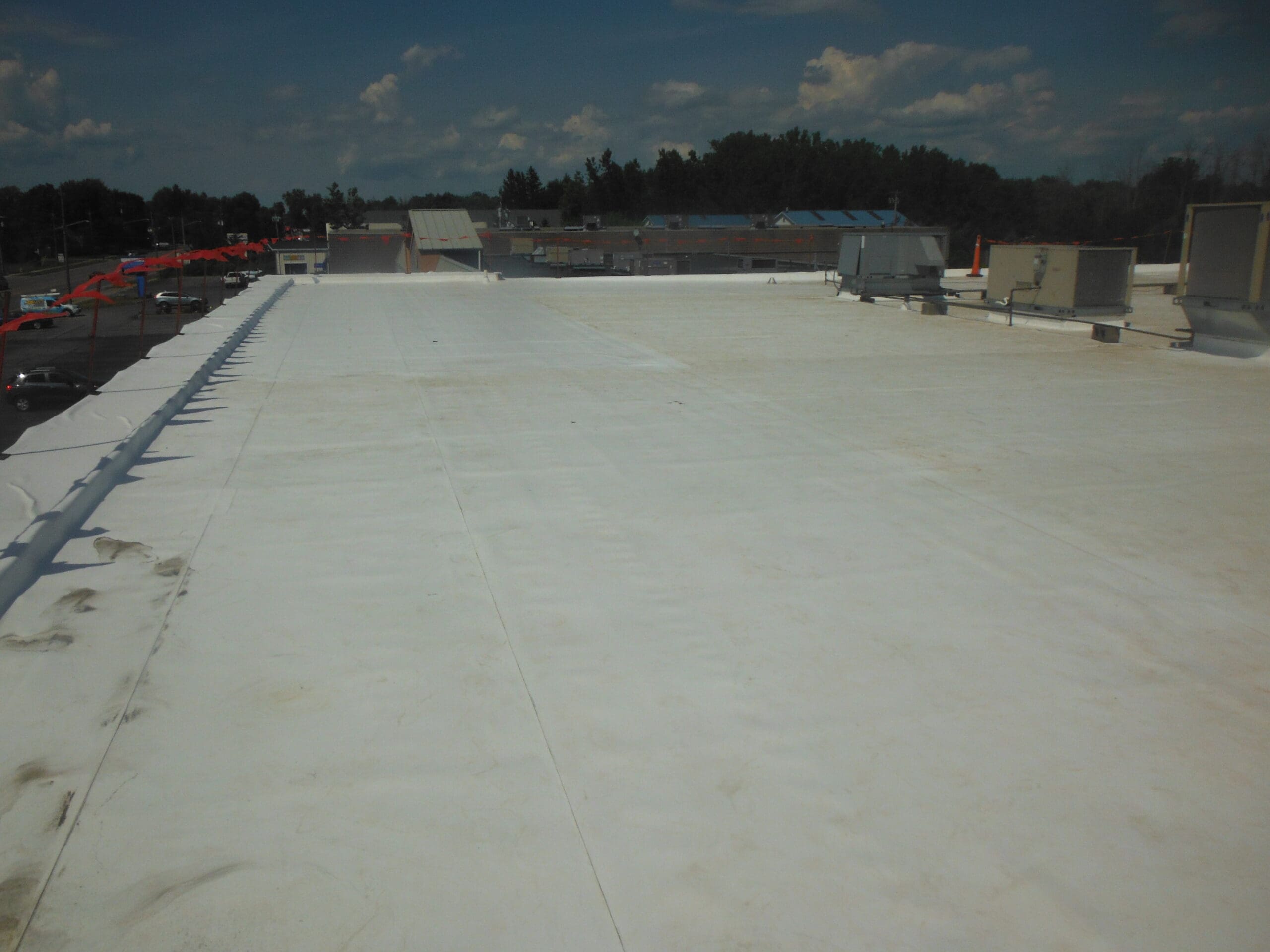
Commercial Roof Insurance Claim Assistance
Damage documentation, adjuster walk-throughs, and complete repair scopes for Orlando commercial roof insurance claims.
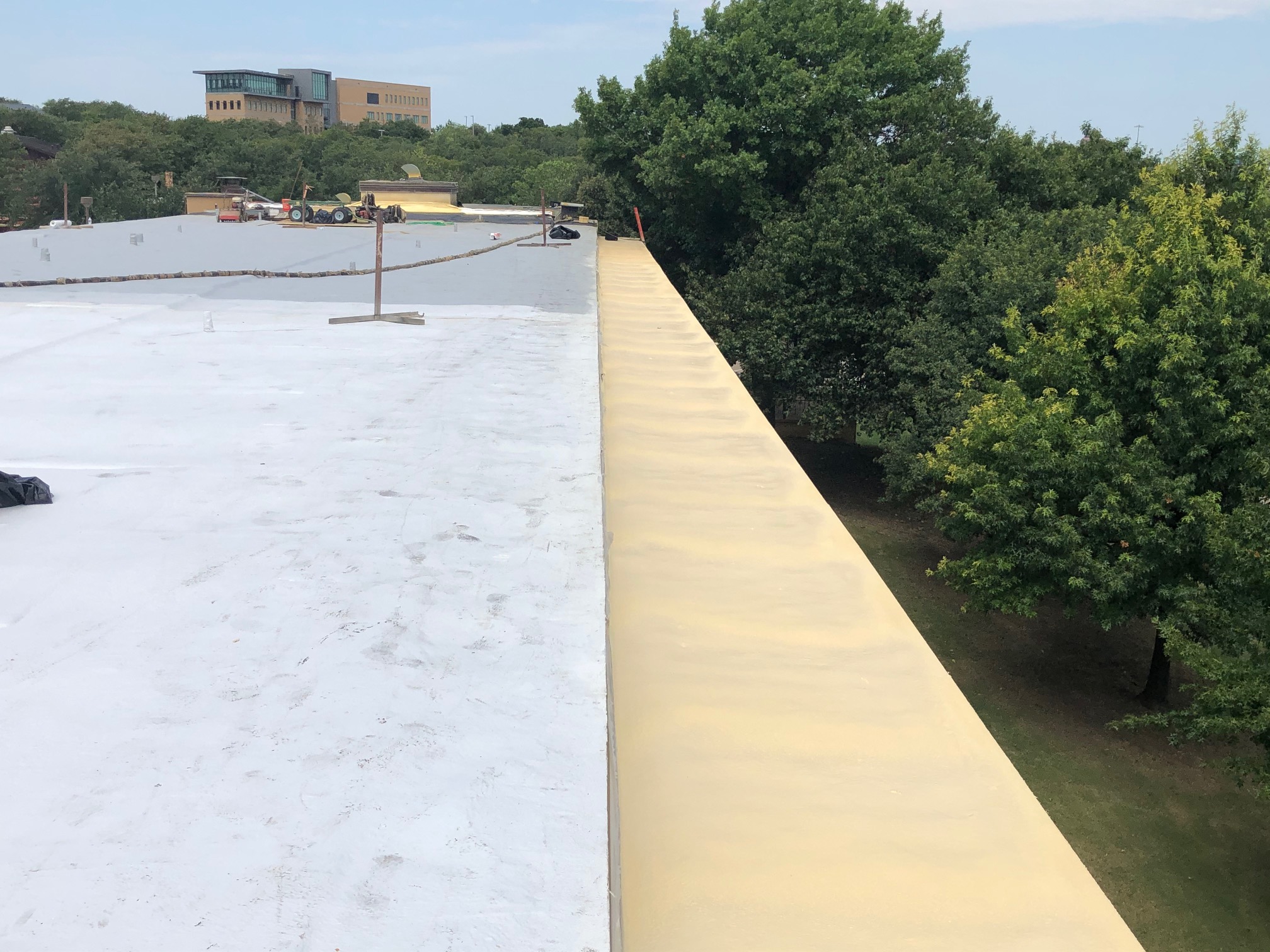
Wind & Storm Damage Roof Insurance Claims
Documentation for convective thunderstorm wind and lightning damage outside of named storms.
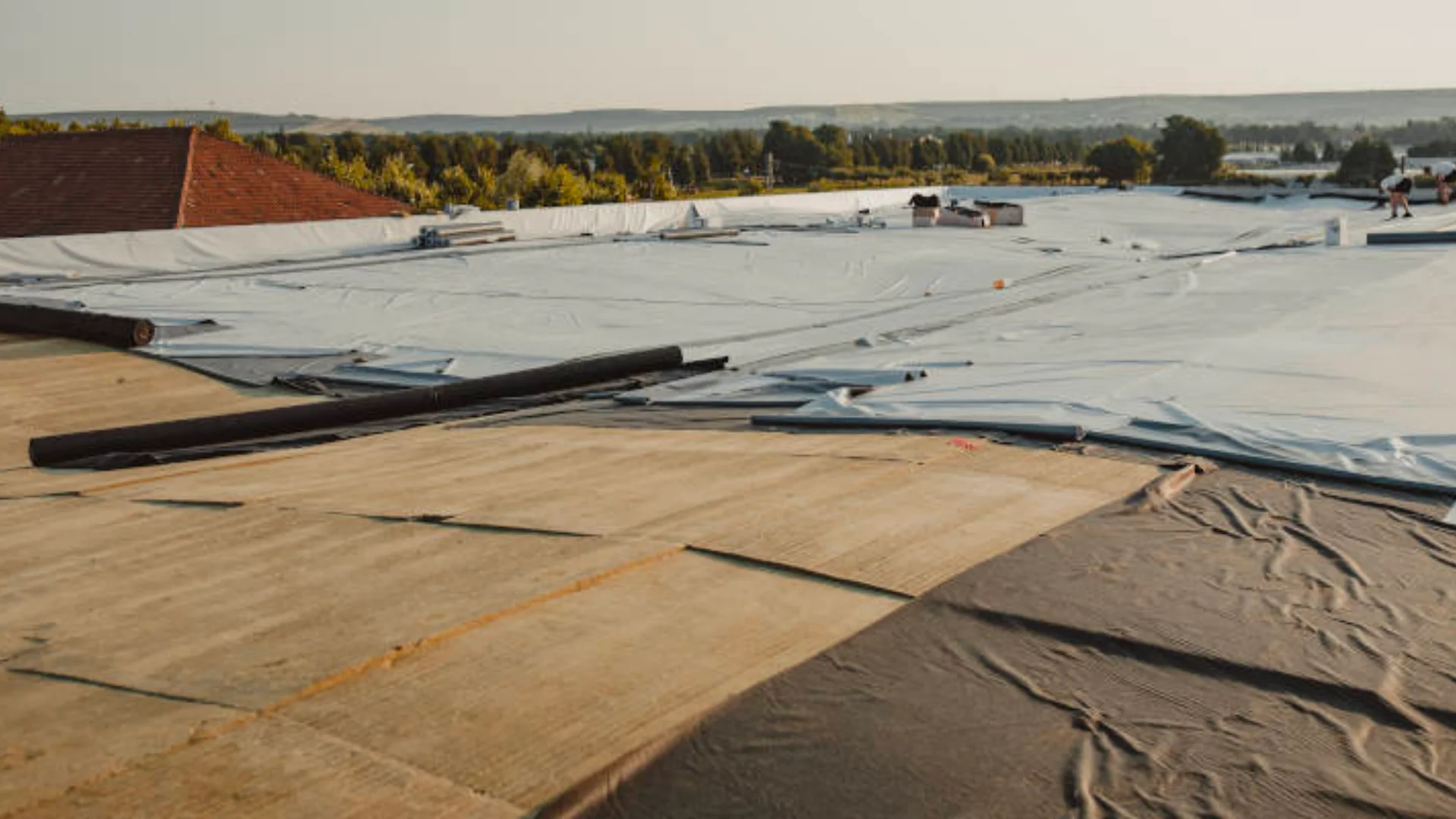
Emergency Roof Repair
Rapid tarp-and-dry-in response for active leaks and storm-opened roofs across Orlando.